Home › Services
Lighting installation for Danville homes, inside and out
Good lighting changes how a room feels long before anyone notices the fixtures. In Danville and across the San Ramon Valley, a lot of homes still carry the original lighting from the 1970s or 1980s: a single ceiling fixture in each bedroom, a fluorescent box over the kitchen and a couple of coach lights by the garage. Replacing that with recessed LEDs, pendants over an island, under-cabinet strips and well-aimed exterior lights is one of the most noticeable upgrades a house can get. This page covers fixture types, layout, dimmers, color temperature, controls, outdoor and low-voltage systems and the energy rules behind new work, so you can plan the project and read a proposal with confidence.
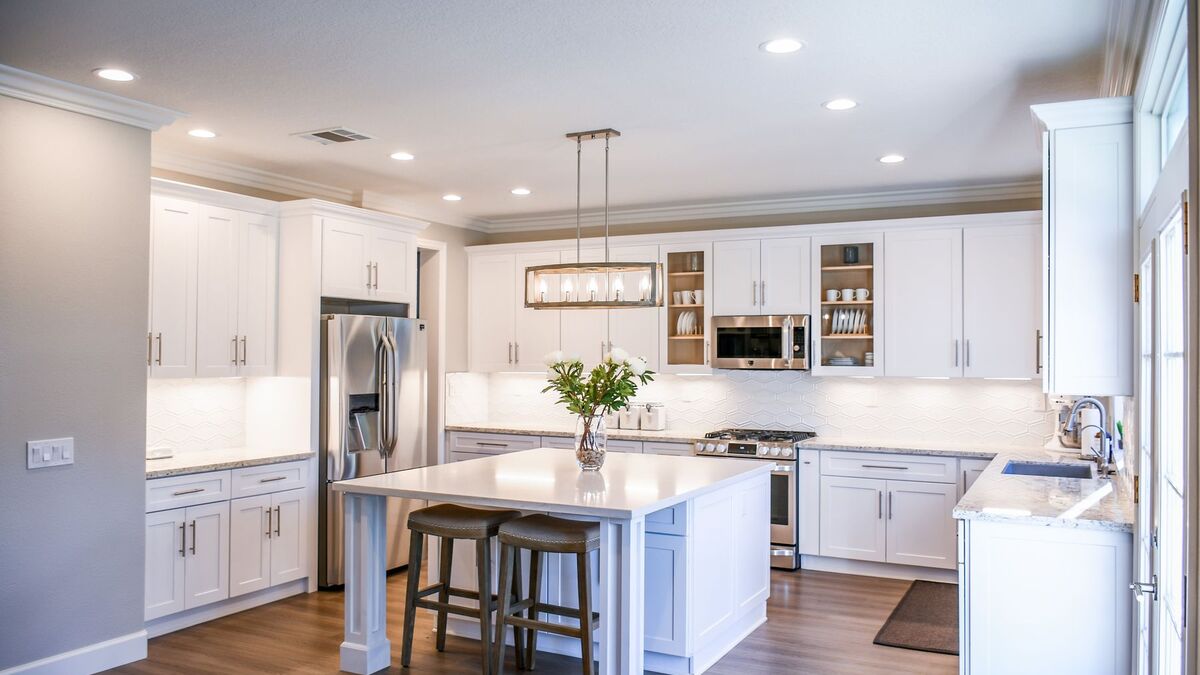
Recessed lighting: new cans versus slim LED wafers
Recessed lights used to mean a metal housing, or can, mounted between joists with a separate bulb and trim. Plenty of older valley homes have them, often with yellowed trims and incandescent floods that run hot. Existing cans can usually take an LED retrofit module that screws into the old socket and clips into the housing, a fast way to modernize without opening the ceiling.
For new locations, slim LED wafer fixtures have largely replaced cans. They are thin enough to sit in a ceiling cavity with little clearance, connect through a small remote junction box, and install through a round hole cut from below. That matters in single-story ranch homes with low attics and in two-story houses where the ceiling below sits under a finished floor. Wherever insulation will touch the fixture, it must be rated for that contact, and fixtures in a ceiling below an attic should be the airtight type that California's energy code expects, so conditioned air does not leak up through the holes.
Laying out recessed lights so a room looks even, not spotted
The common mistake is a tidy grid centered in the room that leaves the walls dark and puts a bright spot on top of everyone's head. A better layout starts with what happens in the room. Kitchens need light over counters, not over the floor in the middle. Living rooms benefit from light washed onto walls and artwork, which makes the space feel larger. Hallways need enough fixtures to avoid dark patches between them.
Spacing depends on ceiling height, the beam spread of the fixture and how bright each one is, so there is no single rule that fits every room. Electricians and lighting designers work from the fixture maker's spacing guidance and adjust for joists, ductwork and sprinklers found once the ceiling is opened.
Pendants, chandeliers and fixtures that hang
Pendants over a kitchen island or a dining table are often the fixtures people notice first. Hanging height should leave clear sight lines across the island and enough headroom for anyone walking past, and the size of a chandelier should suit the table rather than the room. A heavy fixture needs a ceiling box listed for its weight and secured to framing, not to drywall alone, and a ceiling fan needs a box made specifically for the motion of a fan.
Two-story entries and family rooms, common in Blackhawk and newer parts of San Ramon, add a practical problem: reaching a fixture that hangs high above the floor. Installing or replacing one may call for scaffolding or a tall extension ladder, and a fixture with long-life LEDs, or one lowered on a winch, saves trouble later.
Under-cabinet and task lighting in kitchens and work areas
Overhead lights behind you cast your own shadow onto the counter. Under-cabinet lighting fixes that by putting light right where you chop, read recipes and wipe up. Today that usually means slim LED tape in an aluminum channel with a diffuser, or low-profile puck or bar fixtures. The options split into two families.
- Line-voltage fixtures, wired straight to a household circuit, simpler where a run is short and a junction box is handy.
- Low-voltage tape or bars fed by a driver, a small power supply hidden in a cabinet or above it, flexible in length and very slim.
- Plug-in kits that use a counter receptacle, which are fine for renters but leave a visible cord and occupy an outlet.
- Hardwired systems with a wall switch or dimmer, the cleanest finish when a kitchen is already being remodeled.
Dimmers and LEDs: why some lights flicker or hum
Dimming LED fixtures is where a lot of new lighting goes wrong. An old dimmer designed for incandescent bulbs may not reduce the light smoothly, may leave fixtures glowing faintly when off, or may cause flicker and buzzing at low settings. The fix is matching the dimmer to the LED driver: look for dimmers whose maker lists compatible fixtures, and fixtures that say what dimmer type they need, such as forward phase or reverse phase.
Low-voltage tape and some decorative fixtures may need a specific dimming driver as well. Mixing different fixture brands on one dimmer is another common cause of uneven dimming. If you already have flicker, the electrical repair page explains when flickering points to a wiring fault rather than a dimmer mismatch.
Choosing color temperature and brightness for each room
Color temperature, measured in kelvin, describes whether white light looks warm and amber or cool and bluish. Lower numbers, around 2700K, feel close to the old incandescent glow and suit bedrooms and living spaces. Around 3000K reads crisp but still warm and works well in kitchens and baths. Higher values feel clinical in most homes and are better kept to garages and workshops.
Mixing color temperatures in one room makes fixtures look mismatched, so pick one value per space and stick with it. Some fixtures let you select the temperature with a small switch during installation, and warm-dim models get warmer as they dim, which flatters evening dining. Color rendering matters too: fixtures with a high color rendering index make food, skin and paint look natural. Brightness is listed in lumens, not watts, and dimmers make it easy to err a little on the bright side.
Smart switches, scenes and lighting controls
Smart switches and dimmers replace a standard wall control and let lights be scheduled, grouped into scenes and controlled from a phone or voice assistant. Before choosing a product, check two details: many smart switches need a neutral conductor in the switch box, which some older homes do not have there, and they need a reliable wireless network or hub.
Occupancy and vacancy sensors are worth considering in laundry rooms, closets, garages and baths, where lights are routinely left on. A vacancy sensor requires you to switch the light on manually but turns it off automatically, which avoids lights popping on when the dog wanders in.
Exterior lighting for entries, eaves and security
Outdoor lights serve three jobs: helping people find the door and steps safely, discouraging trespass, and showing off the house after dark. Fixtures mounted on walls, eaves and porches need ratings for damp or wet locations depending on exposure, and boxes on stucco need proper sealing so rain does not reach the wiring. Motion-activated floodlights over a driveway or side yard work best aimed down and away from neighbors, with a sensitivity that ignores passing cars.
Many valley homes on hillside lots have long, dark driveways and paths where a few well-placed step lights or bollards do more than one harsh floodlight. Photocell or astronomical timers keep exterior lights on schedule as daylight shifts through the year. Where the new lights sit on a long run from the house, the electrician checks the circuit has capacity and adds ground-fault protection for outdoor receptacles.
Landscape lighting and low-voltage systems
Most residential landscape lighting runs at low voltage from a transformer that plugs into, or is wired to, an outdoor circuit. Low-voltage cable can be buried shallowly in planting beds and fixtures moved as plants grow, which makes these systems flexible. The transformer should be sized for the total fixture load with room to add more, and long cable runs need heavier wire or a hub layout so the farthest lights are not dimmer than the closest.
Good landscape lighting is about restraint: uplighting a few strong trees, grazing a stone wall, lighting a path just enough to walk safely. The transformer itself needs a properly protected receptacle or a dedicated circuit, and that part of the job is line-voltage work for an electrician even when the rest is low voltage. The Alamo page touches on how large lots there shape outdoor projects.
Dark-sky lighting and being a good neighbor
Light that shines sideways or up into the sky wastes energy, glares into neighbors' windows and washes out views of the stars, which people near Mount Diablo notice. Fully shielded fixtures that point light downward, warmer color temperatures outdoors, and timers or motion sensors that keep lights off when nobody needs them all reduce that spill. Some local jurisdictions and homeowner associations have their own rules on outdoor fixtures, so check with the building department or the association before choosing bright exterior lighting.
How California's energy code shapes new lighting work
California's energy code applies to new and altered lighting in homes. In general terms it favors high-efficacy light sources, which modern LEDs meet, and expects controls such as dimmers or vacancy sensors in certain rooms, along with automatic controls on many exterior fixtures. Recessed fixtures in insulated ceilings face airtightness and contact requirements. The exact rules depend on the room and the scope of the remodel, and the local building department decides what applies at your address.
Lighting work tied to a remodel, new circuits or new recessed fixtures usually needs a permit, while swapping a fixture on an existing box often does not; your local building department sets the threshold. A good proposal says which applies to your project.
Planning your lighting project and getting it priced
Start with a room-by-room list: what feels too dark, where you work at counters, which fixtures you want gone. Photos of each ceiling, the attic access and the panel help the contractor scope the job before the visit. The contractor prices the work after seeing the house; fixture count, ceiling access, drywall patching, fixture choices and any trenching are the main cost drivers. When the lighting is part of a larger update, the home rewiring page covers what changes when the circuits behind the walls also need attention. When you are ready, get in touch through the contact page with your address and the list.
Lighting installation for Danville homes — common questions
Can recessed lights be added to a ceiling with no attic above?
Usually, yes. Slim LED wafer fixtures need very little depth and install through a round hole cut from below, which suits ceilings under a second floor or a flat roof. The harder part is running cable between fixture locations without an attic to work from. Electricians use long flexible drill bits and fish tapes to route wire across joists, sometimes cutting small access holes that get patched afterward. Joist direction affects how easily wire travels, so the layout may shift slightly to follow it.
Why do my new LED lights flicker when dimmed?
The most common reason is a dimmer that was not designed for the LED driver in the fixture. Older incandescent dimmers often cannot handle the small load LEDs draw, causing flicker, buzzing or lights that stay faintly on. Replacing the dimmer with one the fixture maker lists as compatible usually solves it. Flicker that appears on non-dimmed lights, or on several circuits at once, is a different story and can point to a loose connection that an electrician should check.
What color temperature should I choose for kitchen lights?
Most homeowners settle on a warm-to-neutral white for kitchens, around 3000K, which looks clean on counters without feeling like an office. Under-cabinet lighting should match the overhead fixtures so the counters do not look two-toned. If the kitchen opens onto a family room lit with warmer light, keeping both spaces at the same temperature helps them read as one area. Choosing fixtures with a high color rendering index makes food and finishes look true.
How many recessed lights do I need in a living room?
There is no fixed count, because it depends on the room's size, ceiling height, the fixtures' beam spread and output, and what else lights the space. A living room with lamps and a fireplace wall may need fewer recessed lights than a kitchen. A practical approach is to plan light along the walls and over seating areas rather than a dense grid, then put everything on dimmers so the room works for both reading and evenings. The fixture maker's spacing guidance is a solid starting point.
Do I need an electrician for low-voltage landscape lighting?
The low-voltage cable and fixtures in the garden are often a homeowner or landscaper project. The part that needs an electrician is the power source: a properly protected outdoor receptacle or a dedicated circuit for the transformer, with a weather-rated in-use cover. If no outlet exists near the beds, adding one involves an outdoor circuit and possibly trenching. An electrician can also check transformer sizing and cable layout so the farthest fixtures are not noticeably dimmer than the nearest.
Is it worth replacing old recessed cans with LED retrofit kits?
For most homes, yes. Retrofit modules fit into the existing housing, use far less energy than incandescent or halogen floods, run cooler and last much longer. The cost is low because the ceiling stays intact. Check that the module matches the can diameter, that it is rated for use in that housing, and that it works with your existing dimmer. If the cans themselves are damaged or hot to the touch, have an electrician inspect them before retrofitting.
Talk through your site
Start with the address, what you want done, and a few photographs of the area, including anywhere water sits after a heavy rain.
Related work
Electrical Repair
Dead outlets, tripping breakers, flickering lights, warm switches and the faults behind them.
Electrical Panel Upgrades
Service and panel upgrades for EV charging, heat pumps, remodels and aging or problem panels.
EV Charger Installation
Level 2 home charging: circuit sizing, panel capacity, load management and garage or driveway placement.
Home Rewiring
Replacing aging, undersized or damaged wiring in older houses, room by room or whole-house.
Backup Power and Generators
Standby generators, transfer switches and battery-ready wiring for shutoffs and outages.
Across the metro
San Ramon
Planned neighborhoods from the 1970s onward, newer communities to the east and a lot of EV demand.
Alamo
Large-lot hillside homes, older custom houses, long service runs and outdoor lighting.
Blackhawk
Big newer homes on the slopes of Mount Diablo with large loads, gated access and backup power.
Walnut Creek
Postwar ranch houses beside newer infill, older panels and a steady stream of remodels.