Home › Services
Electrical panel upgrades in Danville for EVs, heat pumps, remodels and aging panels
The electrical panel is where every circuit in the house begins, and the service feeding it sets a ceiling on how much the home can run at once. Plenty of houses in Danville and the San Ramon Valley still have the panel they were built with in the 1960s, 70s or 80s, sized for a gas furnace, a gas range and a clothes dryer. Add an EV, swap the furnace for a heat pump, put in an induction cooktop or build an ADU, and that ceiling arrives quickly. This page covers what amperage means, how an electrician decides whether you need more, the difference between replacing a panel and upgrading the service, working with PG&E and the building department, and the alternatives that sometimes avoid a bigger service altogether.
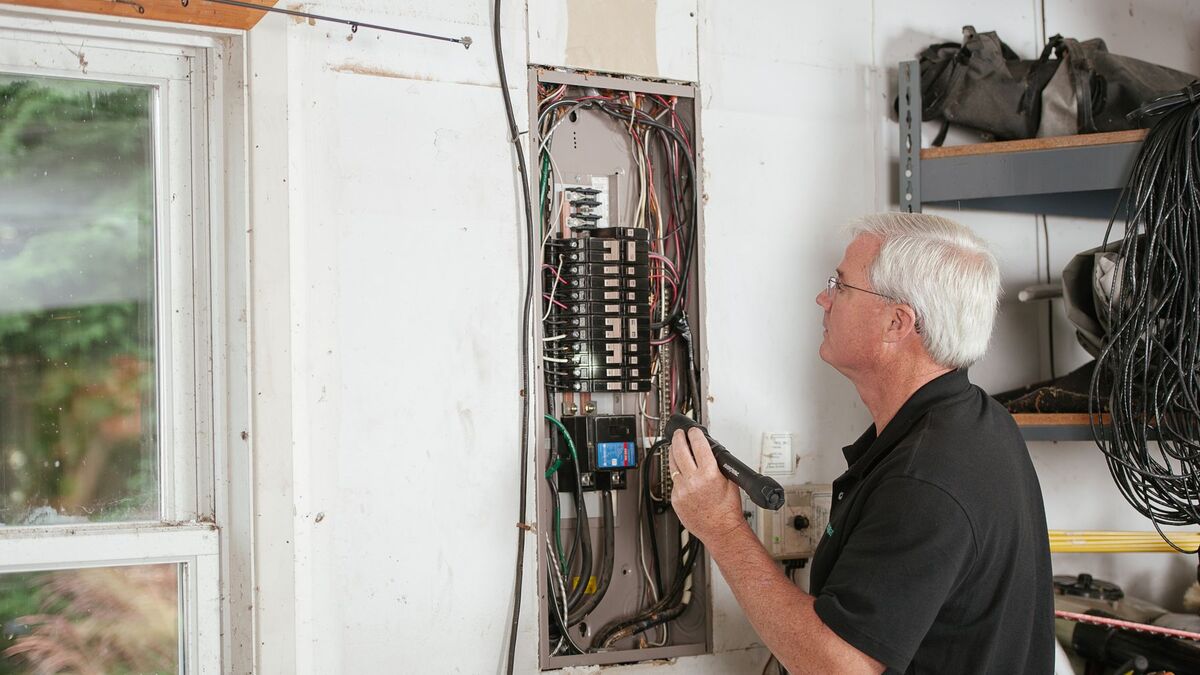
What amperage means for a house
Amperage is a measure of current, and a home's service rating describes how much current the incoming conductors, the meter base, the main breaker and the panel's bus bars are built to carry together. Many older valley homes were built with services of around 100 amps, some smaller; a lot of homes from later decades have 200. The service is only as large as its weakest link.
The number on the main breaker is not a budget you spend by adding up the breakers below it. A panel can hold breakers that total far more than the main, because not everything runs at once. What matters is how much the house actually draws during its busiest stretch -- a hot August evening with the air conditioning running, dinner on the range, the dryer going and a car charging in the garage.
Load calculations: how an electrician decides whether the service is enough
A careful electrician runs a load calculation before recommending an upgrade, using the method set out in the electrical code the state adopts. In general terms, it weighs floor area, fixed appliances, heating and cooling and any large new loads, then applies demand factors reflecting how unlikely it is that everything peaks together.
In some cases the calculation can lean on what the home has actually used, drawing on the meter history the utility keeps, rather than on assumptions alone. Either way, the result is a number to compare against the existing service. Under the rating may mean only a new circuit; over it means more capacity or load management. Ask to see it.
When an upgrade is usually on the table
Most projects here start with a change in how the house uses power:
- A Level 2 EV charger, or a second one, since each draws a large, steady load for hours at a time; the charger side of that project is on the EV charger installation page.
- Replacing a gas furnace or water heater with a heat pump, which moves heating onto the electrical service for the first time.
- An induction range or cooktop in place of gas.
- A kitchen remodel or addition that adds circuits the old panel has no room for.
- An ADU or a converted garage with its own kitchen, heating and laundry.
- Solar, a home battery or a standby generator.
- An existing panel that is damaged, corroded, overheated, out of spaces, or one of the designs with a poor track record.
Panel replacement versus a full service upgrade
A panel replacement swaps the box, bus and breakers for new equipment at the same rating, which suits a house with enough capacity but a panel that is worn out, unsafe or full. A service upgrade raises the rating itself, which usually means a larger main breaker and panel, a new meter base, and new service conductors between the meter and the utility's connection.
How the house is served changes the scope. An overhead service drop from a pole needs a mast and weatherhead that can handle the new conductors. Many neighborhoods in the valley are fed underground, and on those homes the size and condition of the underground lateral, and the conduit it runs in, determine whether a bigger service can be pulled through what exists or needs trenching. Part of that run belongs to the utility and part to the homeowner, and where that line falls affects who does which piece.
Older panels with a poor reputation, and other reasons to replace
A handful of panel brands that are no longer made earned a bad reputation over the years, mostly for breakers that may not trip reliably when they should, or for connections between breaker and bus that loosen and overheat. Some houses in the San Ramon Valley still have them. Many electricians recommend replacing these panels as a matter of course rather than waiting for a symptom.
Other warning signs apply to any brand:
- Scorch marks, melted breaker housings or a panel cover that feels hot.
- Rust or corrosion inside, often from water tracking down a mast.
- Two wires under a single breaker screw that was not made for two, or a panel packed with tandem breakers to squeeze in more circuits.
- Split-bus designs with no single main breaker, where shutting off the house takes several switches.
- Old screw-in fuses, or breakers that feel loose when the cover is off and the electrician checks them.
Subpanels for garages, additions and ADUs
A subpanel is a smaller panel fed from the main one. It does not add capacity to the house; it moves a group of circuits closer to where they are used, which shortens wire runs and frees up spaces in a crowded main panel. Detached garages, workshops, pool equipment pads and ADUs are the common reasons, and on hillside lots the run out to an outbuilding can be long enough that the feeder has to be sized up to limit voltage drop.
Subpanels are wired differently from the main panel: neutrals and grounds are kept separate, and a detached building gets its own grounding electrode. A detached structure also needs a way to shut off its power at the building. An ADU may need its own meter instead of a subpanel, depending on how it will be rented or billed, and that choice involves the utility and the building department as well.
Smart panels and load management as alternatives to a bigger service
A full service upgrade is not always the only answer. Load management devices watch what the house is drawing and pause or throttle a large load, often an EV charger or a water heater, when the total gets close to the service rating. A smart panel does something similar at the circuit level, shedding circuits in a set order.
These options can turn a house that fails a load calculation into one that passes, which avoids utility work, trenching and a long wait. The trade-off is that the house still has the same ceiling; a heavy load gets paused at the busiest times. For a house heading toward full electrification with two EVs, a heat pump and induction cooking, a larger service may still be the better long-term choice.
Working with PG&E on the utility side
Any change to the service size, and some panel replacements, involves PG&E. The contractor typically submits a service application describing the new load, and the utility reviews whether its transformer and the conductors on its side can handle it. Sometimes the utility has work of its own to do first.
On the day of a service change, the utility or the contractor under the utility's process disconnects power, the old equipment comes out, the new meter base and panel go in, and the house is reconnected once the work passes inspection. Meter work and disconnect timing follow the utility's rules. The utility sets its own schedule, and no one outside it can promise when that will be.
Permits and inspection through the local building department
Panel replacements and service upgrades need a permit and inspection through the building department that covers the address -- the Town of Danville for homes inside town limits, or the city or county responsible elsewhere. The inspector looks at the new equipment, the grounding system, working clearance in front of the panel, labeling and the connections to the existing circuits. Newer requirements, including surge protection and arc-fault or GFCI protection on certain circuits, can come into play when a panel is replaced.
In most cases the inspection has to pass before the utility will restore permanent power, so the building department and PG&E steps are tied together. California's energy code also shapes some projects, especially those adding heat pumps or preparing a home for future electrification, and the contractor should explain which parts touch your job.
How a typical panel replacement day unfolds
The day of the swap generally runs like this:
- Refrigerators, freezers, medical devices and home offices are planned around, because the house will be without power for much of the day.
- Power is disconnected at the meter, under the utility's process.
- The new meter base or panel is mounted, along with new service conductors if the service is being upsized.
- Circuits are landed on new breakers, with arc-fault, GFCI or surge protection added where the work calls for it.
- The inspection takes place, and power is restored once it passes and the utility side is complete.
What a complete panel upgrade proposal should spell out
A proposal worth comparing makes the scope unmistakable. Look for:
- The current service size and the proposed one, with the load calculation behind the recommendation.
- Whether the meter base, mast or underground conductors are being replaced, and who handles which part of the underground run.
- Panel brand and number of spaces, plus room left for future circuits.
- Which circuits get arc-fault, GFCI or surge protection.
- Permit, inspection and utility coordination, and who is responsible for each.
- Any stucco, drywall or trenching repair, and whether it is included or left for the homeowner.
- The workmanship coverage the contractor offers, in writing.
What drives the cost of a panel or service upgrade
A contractor sets the price after seeing the house, because the big variables only show up on site. The largest are whether the service is being upsized or only the panel replaced; whether the meter base and service conductors change; overhead versus underground service, and whether an underground lateral needs new conduit or trenching across a driveway or hillside; relocating the panel; the number of circuits to transfer and how many need added protection; utility-side work; and patching stucco or drywall afterward. If the visit started with a tripping breaker or a dead outlet, that troubleshooting lives on the electrical repair page.
Homes across Danville and the neighboring valley communities are covered. To get started, send the address, a photo of the panel with its door open and its label visible, and a note about what you plan to add.
Electrical panel upgrades in Danville for EVs — common questions
How do I know if my electrical service is too small?
The clearest answer comes from a load calculation, which compares what the house could draw at its busiest against the service rating. Practical warning signs include a panel with no open spaces, breakers that trip when several large appliances run together, lights that dim noticeably when the air conditioning starts, and plans to add an EV charger, heat pump, induction range or ADU. Any one of these is a reason to have the service evaluated before buying equipment that may not fit what the house can handle.
Can I add an EV charger without upgrading my panel?
Often, yes. If the load calculation shows room, a dedicated circuit may be all it takes. If it comes out close, a charger set to a lower current, a load management device that slows charging when the house is busy, or a circuit-sharing switch with the dryer can avoid a service upgrade. If the house is already near its limit, or a second EV and a heat pump are on the way, upgrading the service may make more sense. The calculation decides, not the breaker count.
What is the difference between a panel upgrade and a service upgrade?
A panel replacement installs new panel equipment at the same rating the house already has, usually because the old one is worn, unsafe or full. A service upgrade increases the rating itself, which typically means a larger main breaker and panel, a new meter base and larger service conductors, plus coordination with the utility. People use the phrase panel upgrade for both, so it is worth asking any contractor which of the two they are actually proposing.
How long will the power be off during a panel replacement?
For a straightforward replacement, many homes are without power for most of a working day, though it varies with the size of the panel, the number of circuits, inspection timing and whether the utility has to do its own work before reconnecting. Service upgrades with new conductors or trenching can involve more than one visit. Plan for refrigerators, medical equipment and anyone working from home, and ask the contractor to walk through the expected sequence for your particular job.
Is a smart panel a good alternative to upgrading my service?
For a house that is only a little short and adding one big load, it often is. A smart panel or load manager holds total demand under the existing rating by pausing loads at peak times, which can skip utility work and trenching. It does not raise the ceiling, so a home planning full electrification with several large evening loads may be better served by more capacity. Running the load calculation both ways shows which fits.
Does PG&E have to be involved in a panel upgrade?
For a service size increase, yes. The utility reviews the application, checks whether its equipment can carry the new load, and controls the disconnect, meter work and reconnection. Even some same-size panel replacements need the utility to pull the meter or cut power at the service. The contractor usually handles the application and scheduling, but the utility sets its own timeline. Building the utility step into the plan early avoids surprises.
Talk through your site
Start with the address, what you want done, and a few photographs of the area, including anywhere water sits after a heavy rain.
Related work
Electrical Repair
Dead outlets, tripping breakers, flickering lights, warm switches and the faults behind them.
EV Charger Installation
Level 2 home charging: circuit sizing, panel capacity, load management and garage or driveway placement.
Lighting Installation
Recessed, pendant, under-cabinet, landscape and outdoor lighting, dimmers and controls.
Home Rewiring
Replacing aging, undersized or damaged wiring in older houses, room by room or whole-house.
Backup Power and Generators
Standby generators, transfer switches and battery-ready wiring for shutoffs and outages.
Across the metro
San Ramon
Planned neighborhoods from the 1970s onward, newer communities to the east and a lot of EV demand.
Alamo
Large-lot hillside homes, older custom houses, long service runs and outdoor lighting.
Blackhawk
Big newer homes on the slopes of Mount Diablo with large loads, gated access and backup power.
Walnut Creek
Postwar ranch houses beside newer infill, older panels and a steady stream of remodels.